
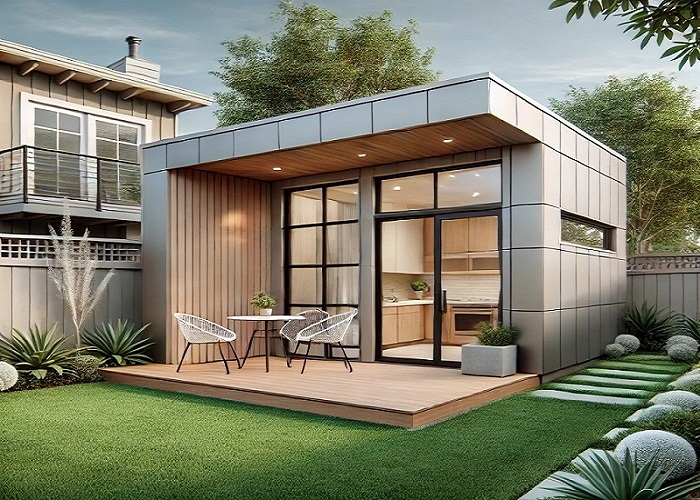
The 2024 California ADU laws represent a significant legislative step in addressing the state's ongoing housing crisis. These new laws are part of a broader effort to expand Accessory Dwelling Units (ADUs) as a flexible, affordable, and sustainable housing solution. ADUs, often referred to as granny flats, in-law units, or backyard cottages, offer a way to add housing density without the need for large scale developments. The laws introduced in 2024 aim to streamline the approval process for ADUs, expand zoning flexibility, and provide financial incentives to homeowners. Below is a detailed breakdown of the key legal components of the 2024 ADU law act in California.
New 2024 California ADU Laws: Key Changes and Provisions
As of 2024, California has enacted several important laws regarding Accessory Dwelling Units (ADUs) to simplify their construction and enhance housing options throughout the state. These laws aim to address the ongoing housing crisis and encourage the development of affordable housing solutions. Here are the key provisions of the new ADU laws:
1. AB 1033: Selling ADUs Separately
- Homeowners can now sell ADUs independently from their primary residence, a shift from previous regulations that prohibited such actions.
- Local agencies may adopt ordinances allowing ADUs to be sold as condominiums with the approval of the California Department of Real Estate.
- Homeowners can establish a Homeowners Association (HOA) to manage shared properties between the primary residence and the ADU.
2. AB 976: Indefinite Owner-Occupancy Prohibition
- The law extends the prohibition on owner-occupancy requirements indefinitely for ADUs permitted between January 1, 2020, and January 1, 2025.
- Local agencies cannot impose owner-occupancy conditions on new or converted ADU projects permitted after January 1, 2025.
- However, Junior ADUs (JADUs) may still be subject to owner-occupancy requirements.
3. AB 434: Pre-Approved ADU Plans
- By January 1, 2025, all California cities and municipalities are required to have a pre-approved ADU plan scheme.
- Cities must review and accept submissions for these plans, typically created by architects, to facilitate easier access for applicants.
- Fees may be charged for accessing designs, processing applications, and making necessary modifications to meet specific property requirements.
4. Streamlined Permit Processes
- Local agencies are encouraged to streamline permit processes for ADUs to reduce delays and improve efficiency.
- This includes faster review timelines and the elimination of unnecessary bureaucratic hurdles for applicants.
5. Enhanced Utility and Infrastructure Support
- New laws require local governments to provide adequate utility connections and infrastructure support for newly constructed ADUs.
- This ensures that developments are sustainable and can handle the additional housing units effectively.
As of 2024, the State of California continues to enact new ADU laws that lift restrictions and make it easier and more affordable to build ADUs. Due to these new laws, ADU construction in California has surged, with over 80,000 ADUs permitted since the first ADU reform bill was passed in 2016.
ADU Heights
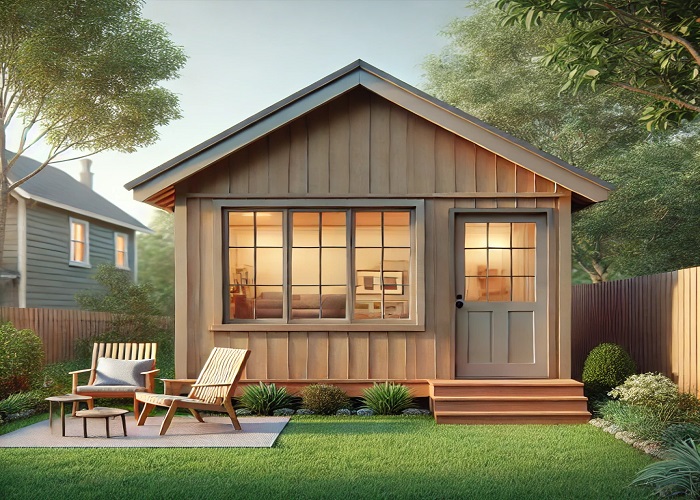
- 16 ft: Allowed under any circumstances.
- 18 ft: Allowed if the proposed ADU is within ½ mile of public transit or the property already has a multi-family dwelling two stories high.
- 25 ft: Allowed if the ADU is attached to the primary dwelling, depending on the underlying zoning code of the property (the lowest will apply).
Parking Requirements
Off-street parking is mandated for Accessory Dwelling Units (ADUs) at a rate of one space per unit or bedroom, except under the following conditions:
- The ADU is situated within half a mile of public transit.
- The ADU is located within an architecturally or historically significant district.
- The ADU is converted from an existing space or accessory structure.
- On-street parking permits are required but not available to the ADU occupant.
- A car-sharing vehicle is located within one block of the ADU.
Additionally, if you are converting your garage into an ADU, your city cannot require you to replace the lost off-street parking space.
ADU Size Regulations
In California, cities must permit a minimum size of 850 square feet for one-bedroom ADUs and at least 1,000 square feet for ADUs with two or more bedrooms. While cities cannot impose smaller maximum sizes, they may establish larger ones. In jurisdictions without specific ordinances, the maximum size is capped at 1,200 square feet for detached ADUs and up to 50% of the existing main residence's floor area for attached ADUs.
It's important to note that you are always allowed to construct an 800 square foot ADU. For instance, if your main residence is 1,400 square feet (which would limit your attached ADU to 700 square feet under the 50% rule), you are still entitled to build an 800 square foot ADU.
Garage conversion ADUs have no size limit as long as they remain within the existing footprint. For example, if you have a 2,000 square foot barn on your property, the entire structure can be converted into an ADU, provided you do not expand the existing footprint.
Setback Regulations
Setbacks refer to the required distance between the ADU and the property boundary. For ADUs, setbacks can be as small as 4 feet from the side and rear property lines. In some cities, like San Diego, ordinances even allow for 0-foot side and rear setbacks.
Front setback requirements depend on your jurisdiction. However, if your city's front setback regulations obstruct your ability to construct an 800 square foot ADU on your property, those front setbacks cannot be enforced due to a state exemption.
Effects of the 2024 ADU Laws on Homeowners and Developers
The 2024 ADU laws bring significant changes for homeowners, developers, and investors, allowing for the construction of Accessory Dwelling Units (ADUs) for rental purposes without any owner-occupancy requirements, as outlined in Section 66315 of the California Government Code. Starting in 2025, the introduction of pre-approved ADU plans, as specified in Section 65852.27, will facilitate a more streamlined development process for these units. Additionally, with the implementation of AB 1033, homeowners, developers, and investors will have the opportunity to convert ADUs into condominiums and sell them independently from the primary residence.
Understanding Local Regulations and Legal Considerations
While California is actively promoting ADU development, the actual implementation occurs primarily at the local level. Therefore, it's crucial to familiarize yourself with the specific ADU regulations in the cities and counties where your project is located. Collaborating with experienced professionals such as licensed architects and legal experts—is essential for successfully navigating the complexities of local regulations, whether you are developing large multi-family housing complexes or smaller ADUs.

The 2024 California ADU laws represent a comprehensive effort to increase the state's housing supply, promote affordable housing, and ensure sustainable development. By expanding zoning flexibility, streamlining the permitting process, providing financial incentives, and protecting tenants, the new laws aim to make ADU construction more accessible and affordable for homeowners while addressing the state's pressing housing needs.
These laws reflect California's broader strategy to tackle its housing crisis by utilizing existing residential land more efficiently and promoting innovative solutions like ADUs to provide affordable housing options across the state. As ADU development continues to grow, these laws will play a critical role in shaping the future of California's housing landscape.