
In 2020, California implemented a series of new laws to address the state's growing housing crisis by making it easier for homeowners to build Accessory Dwelling Units (ADUs). These changes aimed to increase the supply of affordable housing by streamlining the ADU approval process and removing many barriers that had previously made building these units difficult. ADUs, also known as granny flats, in-law units, or secondary units, are small, self-contained residential units built on the same lot as a primary residence. The 2020 ADU laws provide homeowners with more flexibility, while also maintaining important regulations to protect the interests of the wider community.
Key Provisions of the 2020 ADU Law
1. Streamlined Approval Process
- One of the most significant changes introduced by the 2020 law is the simplification of the ADU approval process. Previously, homeowners were often required to undergo extensive and lengthy discretionary review processes, which could involve public hearings and subjective decisions from local planning commissions. The 2020 law mandates that local governments process ADU applications through a ministerial (or administrative) process, meaning that approval is based on compliance with predetermined criteria, eliminating the need for a public hearing.
- Local jurisdictions must approve or deny ADU applications within 60 days. This faster approval timeline enables homeowners to begin construction sooner, helping to increase the state's housing supply more quickly.
2. Reduced Fees
Another important aspect of the 2020 law is the reduction of impact fees for ADUs. Impact fees, which cover infrastructure costs such as roads, schools, and utilities, can significantly increase the cost of constructing an ADU. Under the 2020 law, ADUs under 750 square feet are exempt from impact fees altogether. For ADUs larger than 750 square feet, fees must be proportional to the size of the ADU relative to the main residence. This change can result in substantial cost savings for homeowners, making ADU construction more financially feasible.
3. Relaxed Size and Setback Requirements
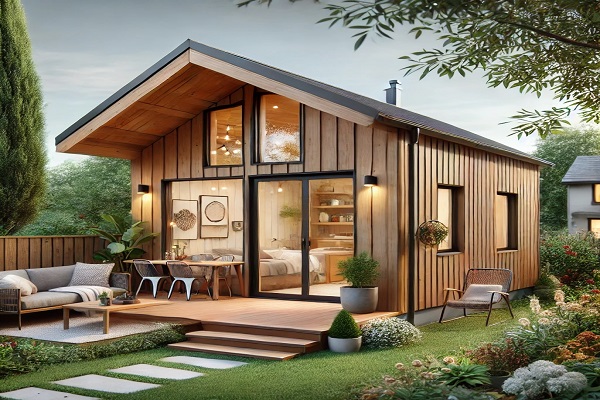
- The new law expands the allowable size of ADUs and relaxes setback requirements. In previous years, many local governments had strict size and setback rules that made it challenging for homeowners to construct ADUs. Under the 2020 law, the maximum size for detached ADUs is now 1,200 square feet, regardless of the size of the primary dwelling. For attached ADUs, the maximum size is either 50% of the primary dwelling's size or 1,200 square feet, whichever is smaller.
- Setback requirements, which dictate the minimum distance between the ADU and property lines, have also been relaxed. The new law requires a maximum setback of 4 feet for both side and rear yard property lines. This allows homeowners to utilize their property more efficiently and provides more flexibility in the placement of ADUs.
4. ADUs and Junior ADUs
California's 2020 law also allows for the construction of both an ADU and a Junior Accessory Dwelling Unit (JADU) on the same lot. A JADU is a smaller type of ADU, usually carved out of an existing part of the primary home, such as a garage or a spare room, and is limited to 500 square feet in size. Homeowners can now legally build both an ADU and a JADU on the same property, significantly increasing the potential housing density. This provision helps homeowners maximize their property while contributing to the state's housing stock.
5. Owner-Occupancy Requirement Suspended
One of the most significant barriers to ADU construction in the past was the owner-occupancy requirement. This rule required that either the primary residence or the ADU be occupied by the property owner. In 2020, this requirement was suspended until 2025, meaning that homeowners can now rent out both the primary residence and the ADU. This change has opened up more rental opportunities, contributing to the state's rental housing supply.
6. Garage Conversions
The 2020 law makes it easier to convert garages into ADUs. In the past, local jurisdictions often required homeowners to replace parking spaces lost due to garage conversions, which made ADU projects more expensive and complex. The new law removes the requirement to replace off-street parking when a garage, carport, or covered parking structure is converted into an ADU. This provides homeowners with greater flexibility in utilizing their existing structures.
7. Parking Requirements
Parking requirements for ADUs have been further relaxed under the 2020 law. In many cases, ADUs no longer require any additional parking spaces. For example, if the property is located within a half-mile of public transit, in a historic district, or if the ADU is part of the existing primary residence or an existing accessory structure, no additional parking is required. This provision encourages ADU development in transit-oriented areas, promoting sustainable growth.
8. ADUs in Multi-Family Buildings
The 2020 law also extends ADU development rights to multi-family buildings. Property owners of multi-family dwellings can now add one or more ADUs by converting non-livable spaces such as storage rooms, garages, or basements. Additionally, up to two detached ADUs are permitted on multi-family lots. This is a significant expansion of ADU development rights and can help increase the housing stock in urban areas where multi-family dwellings are prevalent.
Impact on Homeowners
The 2020 California ADU law has made it much easier for homeowners to build ADUs on their properties, providing numerous benefits. ADUs can serve various purposes, such as housing family members, providing rental income, or creating home office spaces. By simplifying the approval process, reducing fees, and relaxing size and setback requirements, the law has removed many of the hurdles that once discouraged homeowners from pursuing ADU projects.
Additionally, the ability to build both an ADU and a JADU on the same lot provides homeowners with even more flexibility to utilize their properties. This can be particularly advantageous for multi-generational households, where families may want to live close to each other but still maintain separate living spaces. For homeowners interested in generating rental income, ADUs offer an affordable and effective solution, especially with the suspension of the owner-occupancy requirement until 2025.
Contributions to Affordable Housing
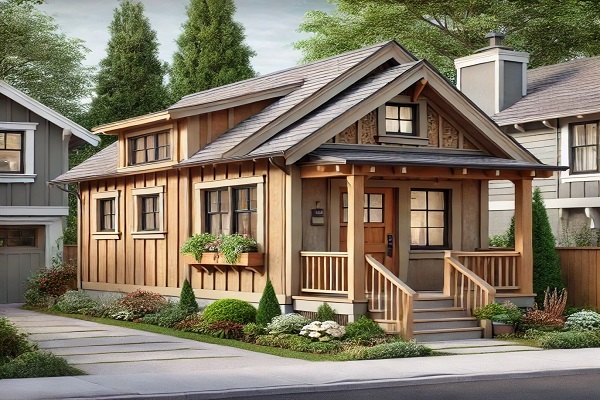
The 2020 ADU law is part of California's broader effort to address its affordable housing crisis. By making it easier for homeowners to build ADUs, the state is helping to increase the supply of affordable housing without the need for large-scale development projects. ADUs provide affordable rental options in existing neighborhoods, often at lower costs than traditional apartment units. Because they are built on properties that already have a primary residence, ADUs make more efficient use of the land and infrastructure, which can help mitigate the strain on urban sprawl.
Furthermore, ADUs can help diversify the types of housing available in residential areas, providing options for individuals and families at different income levels. This is especially important in cities where housing costs have skyrocketed, making it difficult for low-income and middle-income residents to find affordable housing options.